
DALLAS COUNTY / SEAGOVILLE, TX
Spray Foam Insulation in Seagoville, TX
Before covering a hard-to-cool room with more insulation, find out how its ceiling, walls and additions connect. A Seagoville retrofit starts with the surfaces available to inspect and a practical plan for an occupied property.
Existing-home access · Additions · Garage transitions
Make the comfort complaint useful to an inspection.
Tell us whether the room is warm throughout the day or only after sun reaches one side of the house. Note drafts, differences between rooms and any recent changes to ducts or equipment. Those details help identify what should be inspected first.
Spray foam can provide insulation and air control in suitable assemblies. It does not replace a diagnosis of duct leakage, roof water entry or HVAC performance, and a symptom alone does not justify treating every cavity.
Locate the house without assuming its condition.
US 175, Malloy Bridge Road and Old Nacogdoches Road are mapped Seagoville references. Use the property address and access route to explain the site rather than assuming houses along the same road have matching construction or insulation.
The city extends into Dallas and Kaufman counties. Confirm the jurisdiction for the actual address when coordinating a remodel; a Seagoville mailing address by itself does not settle every county or permitting question.
Inspect what can be reached from the hatch.
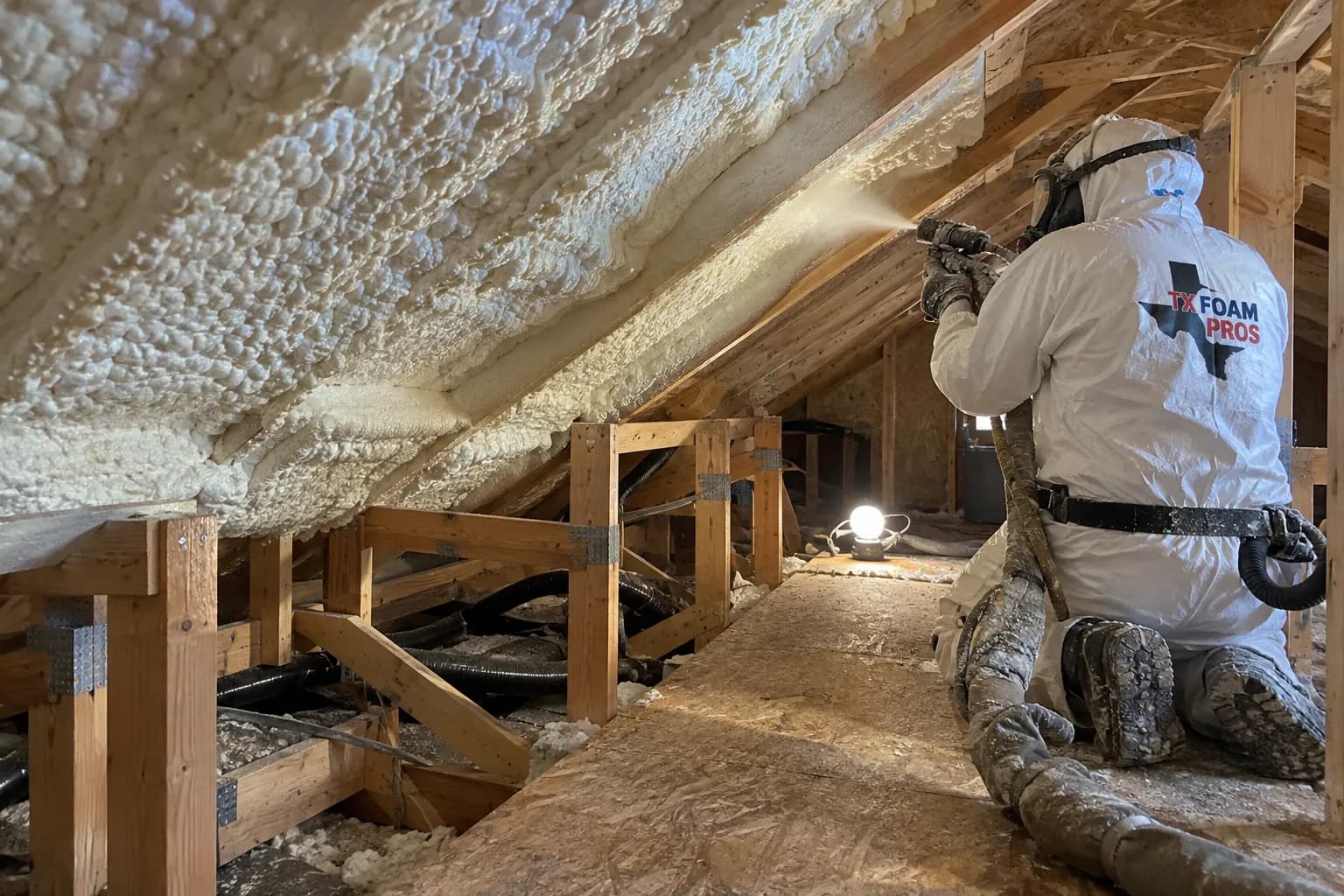
Low framing, stored items and existing insulation can limit a view of the ceiling edge or roof slope. Identify a safe route and decide whether additional openings are needed before promising coverage behind a finished surface.
Compare a retained vented attic with any proposed roof-deck approach. Water control, drying, ventilation, vapor behavior and equipment requirements should be evaluated before the attic boundary changes.
An addition may leave a separate boundary problem.
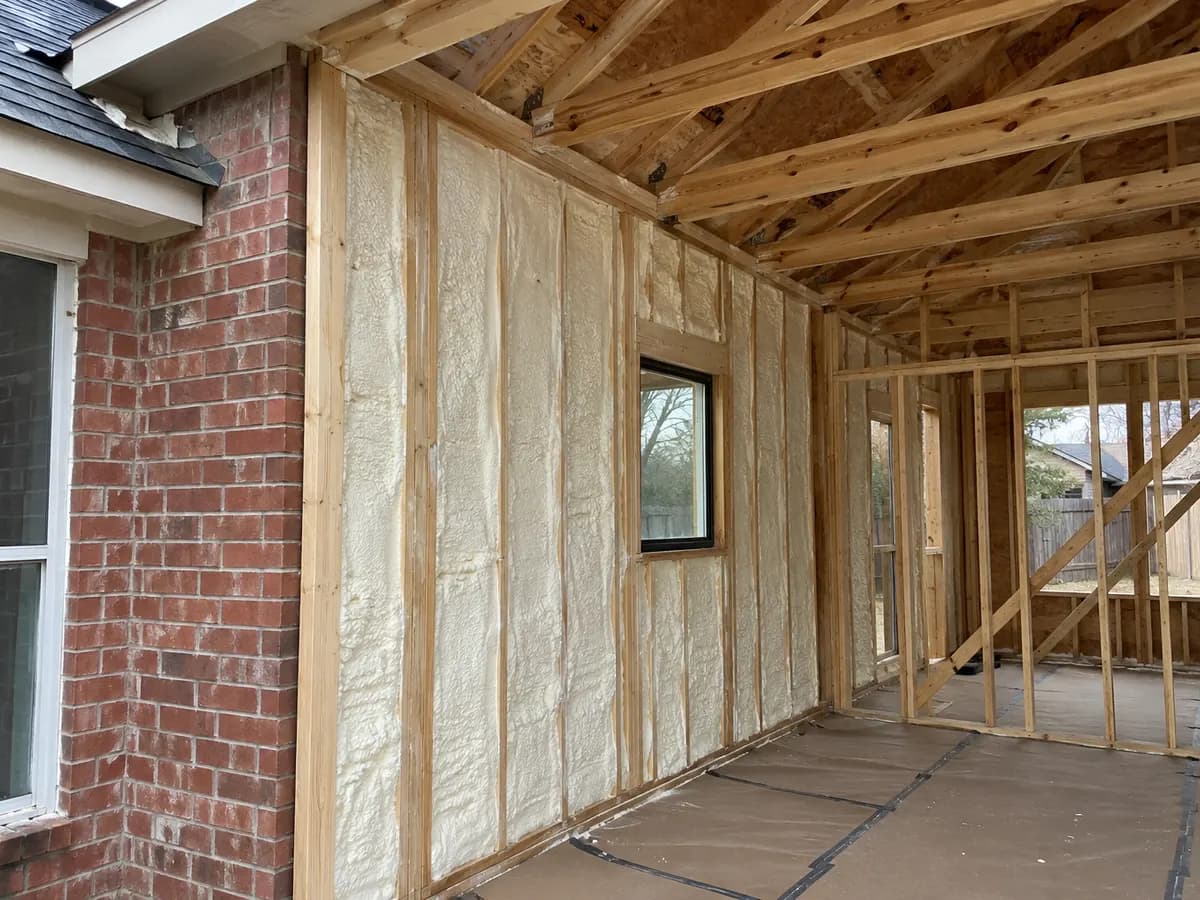
A later room can meet the original house at a change in roof height or wall line. Inspect that junction rather than assuming insulation across the main attic also surrounds the added room.
Discuss finish removal and repair if the connection is concealed. Make access and trade responsibilities explicit, particularly where electrical work, damaged framing or roof repairs must happen before insulation.
Match the material to the cavity you can actually treat.
A suitably deep timber cavity may allow open-cell foam where its vapor behavior and the assembly’s drying design are appropriate. Review the specified installed thickness and any surfaces that should remain visible or serviceable.
Closed-cell may be considered for particular depth, substrate or vapor-control needs. Neither option seals an actively leaking roof or eliminates the need for required ignition or thermal protection and product-specific application conditions.
Decide whether you are treating the garage or the adjoining room.
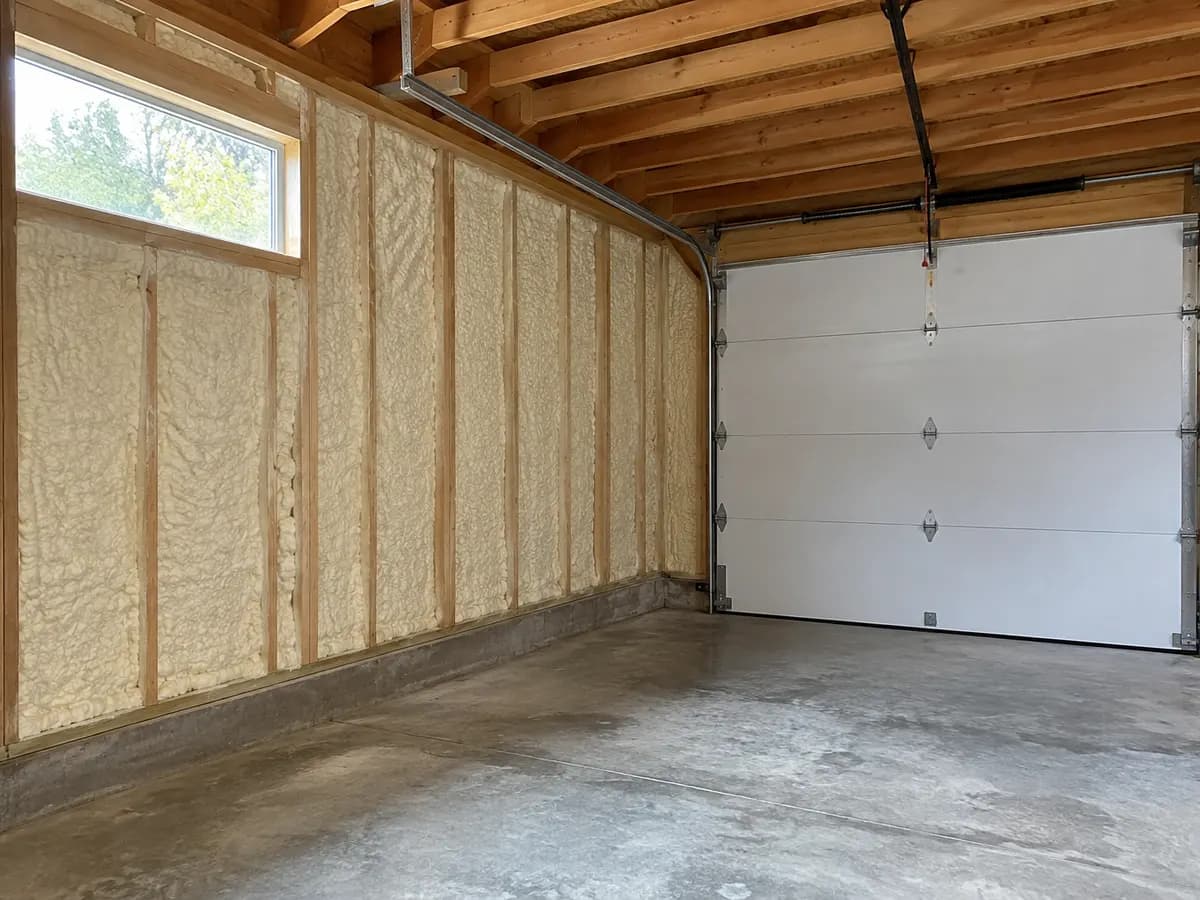
A hot garage and a warm bedroom beside it are different problems. For the bedroom, start with the shared wall or floor and its perimeter; for the garage, describe its intended use and whether it will be conditioned.
Keep the home’s separation from vehicles and workshop air intact. A garage door, ventilation requirement or mechanical limitation can remain important even after selected roof or wall cavities are insulated.
Prepare a scope around the affected part of the property.
Use the residential and attic guides to describe roof, ceiling and wall conditions. Garage guidance can help distinguish the space you want to use from the occupied-room boundary that needs attention.
For a separate metal building, ask about panel suitability, humidity and the operating plan instead of applying the house specification automatically. Foam choice follows the building assembly and use.
Keep the occupied-home work sequence manageable.
List the spaces the installer must pass through and what must be protected, moved or isolated. Ask which materials can remain and which require removal because of damage, contamination, access or the selected assembly.
Agree ventilation and time away for people and pets using the manufacturer’s instructions. Do not base re-entry on a fixed number of hours from an unrelated job or product.
Ask for the work behind the number.
The area to be treated, cavity depth, limited attic access and opening finished surfaces can affect a retrofit quote. Removal, disposal, repairs and protective finishes should be identified rather than left implicit.
Compare proposals using the same surfaces and product specification. Insulating one transition is not the same scope as converting an entire attic, and neither comes with a guaranteed energy-bill reduction.
Explore southeast Dallas coverage from the actual address.
Use the Dallas County overview to explore Seagoville-area services while retaining the city’s Dallas/Kaufman geography. Mesquite and Forney are existing guides for nearby project conversations, with their own building considerations.
Share the address, building use and any work-area constraints when requesting an assessment. Road references help with orientation; coverage and scheduling should still be confirmed for the property.
BEFORE YOU GET STARTED
Seagoville spray foam planning questions
Planning insulation for a property in Seagoville? Start here.
Talk it through with our teamDoes every Seagoville retrofit need new foam throughout the attic?
No. Identify the existing boundary, reachable surfaces and cause of discomfort first. A local connection, an insulation repair and a full attic redesign are different scopes.
What if an addition is inaccessible from the main attic?
It may require another inspection opening or a different work approach. Agree access, limits and finish repair before assuming the concealed junction can be insulated.
Can existing insulation remain in place?
Retained material may be suitable if it is sound and compatible with the chosen assembly. Damage, contamination, access and inspection needs can change that decision.
Will insulating a garage fix the bedroom next to it?
Only if the proposal addresses the boundary around the bedroom and the relevant source of heat or air leakage. Garage use, door openings and equipment are separate considerations.
Is all of Seagoville in Dallas County?
No, a portion extends into Kaufman County. This site uses the Dallas County coverage overview, but the exact project address should establish jurisdiction and site details.
How can I make the first inquiry more useful?
Identify the affected room, accessible attic or wall surfaces and any known leaks. Include the address and intended work timing so preparation and coverage can be discussed.
TX FOAM PROS / YOUR NEXT STEP
Give the Seagoville retrofit a clear starting point.
Describe the uncomfortable space, any additions and the access available. We can discuss what an assessment should examine before an insulation scope is selected.
TX FOAM PROS / FREE ESTIMATES
Let’s plan your insulation project.
Start with what you know. We’ll help with the next steps.