
DALLAS COUNTY / DUNCANVILLE, TX
Spray Foam Insulation in Duncanville, TX
You should be able to explain an insulation proposal in terms of the rooms it will serve. For a Duncanville home, begin with the discomfort, inspect the reachable framing and separate necessary repairs from the insulation work.
Occupied-home retrofits · Attic access · Targeted scope
Describe the room before choosing the material.
A front room that heats up late in the day may not have the same problem as a draft beside a ceiling opening. Note timing, sun exposure and differences between rooms so an assessment can focus on the likely boundary.
Insulation and air sealing may help with unwanted heat transfer or leakage, but ducts, windows and HVAC operation can also matter. The useful result of an assessment is a defined scope with realistic limits.
Use familiar Duncanville roads to orient the inquiry.
North Main Street, Wheatland Road, I-20 and US 67 are verified local references. A property near one of these corridors still needs its own review; road proximity does not establish construction age or insulation condition.
Duncanville is in Dallas County. The wider Dallas guide can help with a related property, while this page focuses on preparing a room-by-room retrofit conversation at your actual address.
Agree how finished surfaces will be reached.
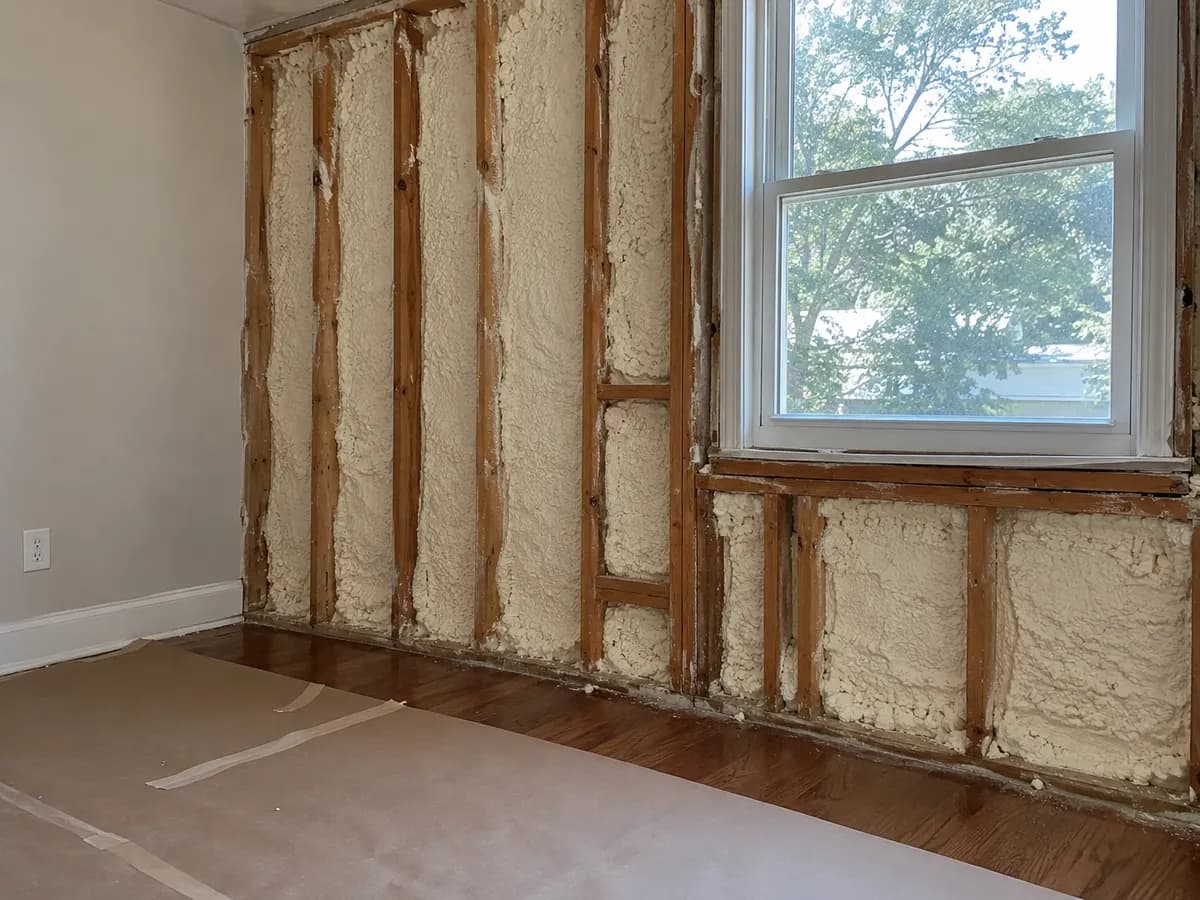
In an occupied house, attic access may be much easier than opening a wall or sloped ceiling. Identify what can be inspected without disturbance and where a limited opening may be needed to understand a hidden connection.
Finishes, electrical work and framing repairs should have clear responsibilities. Do not cover known deterioration or water entry simply to complete the insulation stage.
Do not confuse an attic repair with an attic conversion.
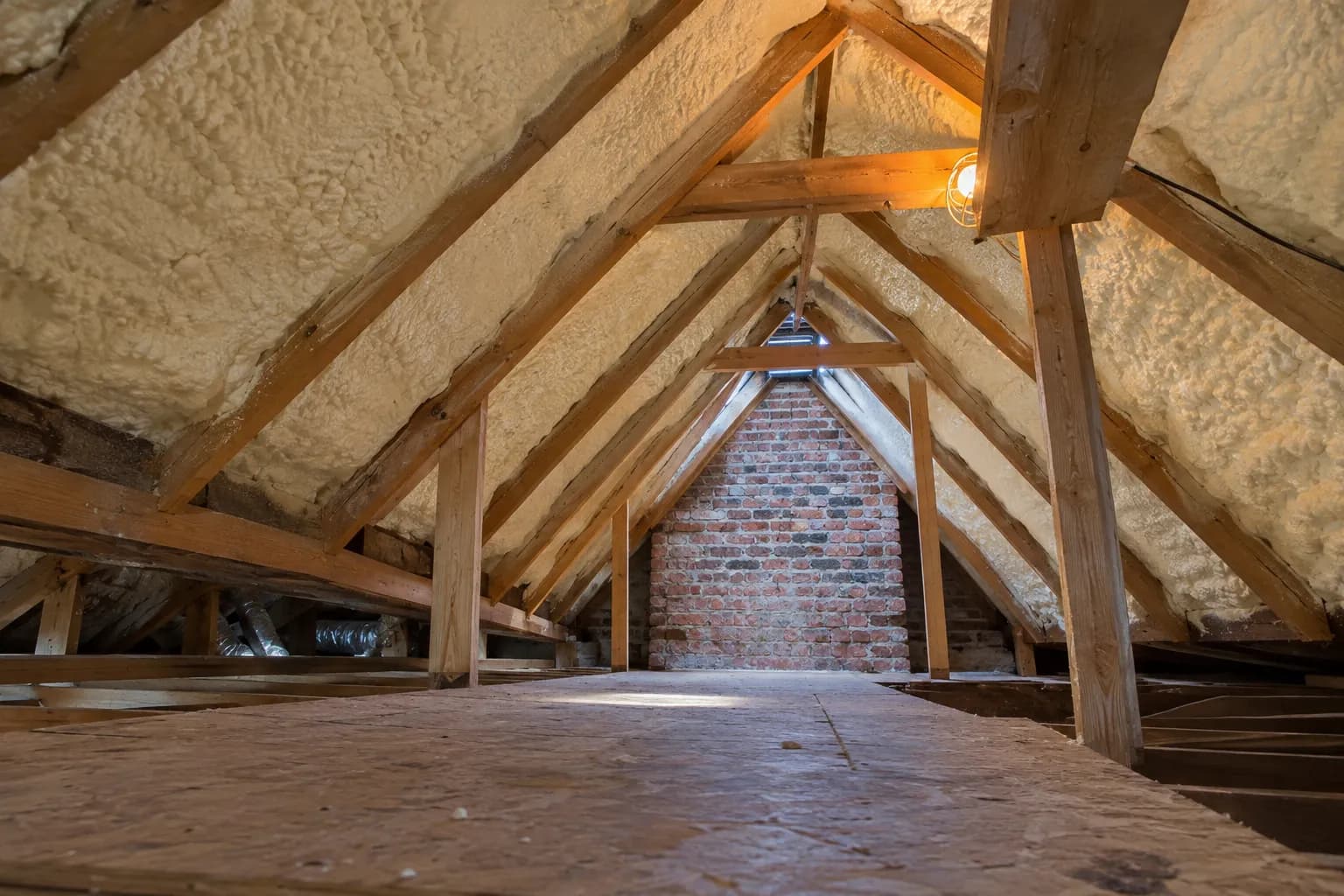
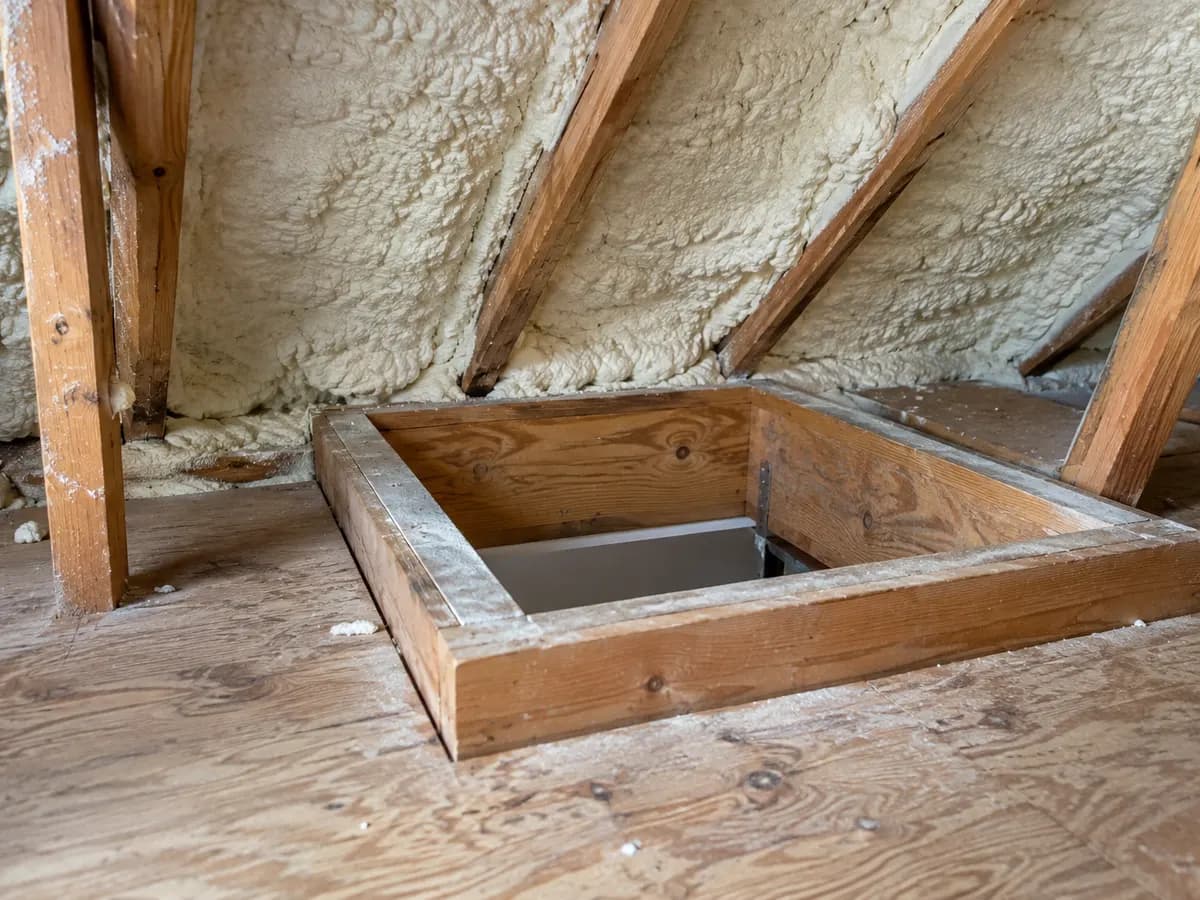
A vented attic above an insulated ceiling and an unvented roofline assembly are different designs. Ask which one is proposed and how the roof, walls and ceiling edges form the boundary around the rooms below.
For a roof-deck change, review drying, water control, indoor humidity, ventilation and any equipment affected. Combustion appliances require appropriate professional evaluation rather than a blanket statement that foam is safe around every installation.
Decide what stays after inspecting its condition.
Sound batts or loose-fill may be retained where compatible with the intended work. Damaged, contaminated or obstructing material can require a different preparation scope. The decision should follow inspection rather than a whole-house removal assumption.
Clarify disposal and cleanup, plus any surfaces that need repair before foam. Separating those tasks makes it easier to compare what different quotes actually include.
Choose a product with the existing assembly in mind.
For accessible timber framing, open-cell may be an option where enough depth and a suitable drying strategy are available. Review installed performance, not just a product label or a promise about comfort.
Closed-cell may be considered where specific depth or vapor-control needs justify it. Confirm substrate compatibility and required protective finishes; neither type corrects a roof leak or substitutes for mechanical work.
Check adjoining spaces when one room is uncomfortable.
An attached garage or a later room addition can interrupt the home’s enclosure at edges that are hard to see. Trace those connections before assuming the easiest attic surface is the only work required.
Keep garage air and fire separation intact. If the owner also wants the garage conditioned, treat its intended use, door openings and ventilation as a separate planning question.
Use the next guide to make the scope clearer.
Residential and attic guidance can help you ask which surfaces and air paths are included. Garage and metal-building guides support separate spaces only when those building types are part of the inquiry.
If future remodeling will expose framing, ask whether the insulation sequence should coordinate with that work. Access created for a planned renovation may change the practical options.
Include access and repairs in the comparison.
A small but difficult ceiling transition can require more preparation than a larger open cavity. The quote should distinguish removal, finish openings, repairs, product thickness and required protection.
Request a written list of treated surfaces and exclusions. A general cost guide provides background; it cannot price the existing conditions in a particular Duncanville house or guarantee its future utility bills.
Prepare the house and the people for the work.
Confirm the Duncanville address, parking and route to the attic or rooms. Identify stored items, pets and occupied areas that need protection or separation before an installation date is agreed.
Review product-specific ventilation, re-entry and reoccupancy instructions with the team. Use the Dallas County overview for wider coverage, while the exact site determines access and scheduling.
BEFORE YOU GET STARTED
Duncanville spray foam planning questions
Planning insulation for a property in Duncanville? Start here.
Talk it through with our teamShould I choose a foam product before a Duncanville assessment?
You can review the differences, but the assembly and accessible conditions should guide selection. Share the room symptoms and existing materials before treating one product as the answer.
Can attic insulation solve every warm-room problem?
No. The cause may include ducts, windows, exposure or HVAC performance. Foam is relevant when the proposed insulation and air-control work addresses verified conditions.
Is complete insulation removal part of every retrofit?
No. Inspection should identify what is sound, damaged, contaminated or incompatible with the selected boundary. Agree the actual preparation and disposal scope in writing.
What if the useful framing is behind a finished wall?
Determine whether an opening is justified and who will repair it. Quotes should identify inaccessible surfaces rather than implying coverage that cannot be reached.
Is Duncanville part of Ellis County service navigation?
This site places Duncanville under Dallas County, its actual county. Nearby southern coverage does not change that assignment.
What precautions apply in an occupied home?
Discuss area isolation, protection of belongings, ventilation and manufacturer-specific reoccupancy instructions. People and pets may need to leave the application zone or property as directed.
TX FOAM PROS / YOUR NEXT STEP
Build a Duncanville estimate around the actual rooms.
Share what feels uncomfortable, what framing is accessible and any renovation plans. We can discuss inspection priorities and the work that belongs in an insulation scope.
TX FOAM PROS / FREE ESTIMATES
Let’s plan your insulation project.
Start with what you know. We’ll help with the next steps.